Dry-Type Transformer Upgrade for an Electronics Plant
Project Overview
When the operations manager of NorthRiver Components Park (name adjusted for confidentiality), an electronics manufacturing facility in Southeast Asia, sent us the first message, the request sounded simple:
“We need to replace two old units before peak season. But we can’t afford production uncertainty.”
In reality, this was not only a replacement job. It was an industrial power distribution upgrade under tight operational constraints. The plant was running mixed loads—SMT lines, automated optical inspection systems, reflow ovens, compressed air systems, and variable-speed HVAC equipment. Power quality had become a limiting factor for stable production.
The facility had been operating with aging cast-resin units and one older oil-based unit in a separate room. The maintenance team had done a good job extending service life, but load growth over several years changed the profile of the site. Voltage fluctuations during shift transitions and motor starts were becoming more visible on sensitive process equipment.
The customer did not ask for a “cheapest transformer.” They asked for a custom transformer solution that could fit real site conditions, fit local compliance requirements, and fit a shutdown window measured in days—not weeks.
Why the Plant Decided to Act
Before starting the procurement process, the client team tracked six months of electrical and production data. Their internal report highlighted three recurring issues:
-
Unplanned stoppages linked to power events
Not all events were transformer failures, but the existing network had limited margin under peak load overlap. -
Uneven feeder loading across workshops
A few sections had higher voltage drop and thermal stress due to cable routing and expansion history. -
Maintenance pressure
Inspection workload increased as the units aged, while production schedules left fewer safe intervention windows.
From a procurement perspective, they were evaluating several options: extending old equipment life, switching to a new oil-immersed transformer package, or adopting upgraded dry-type units for indoor installation near the main process area.
After initial technical discussions, the plant leaned toward a dry-type transformer route because of indoor safety, maintenance accessibility, and compatibility with their factory layout.
Supplier Selection: More Than Price Comparison
The customer contacted us as a potential transformer supplier through their sourcing team, but the technical decision was led by engineering and plant maintenance.
In the first two weeks, most communication was not about nameplate ratings. It focused on questions such as:
- How should capacity margin be set for future line expansion?
- Should harmonic impact from VFD-rich loads change impedance preference?
- How much on-site rewiring would be required if transformer locations changed?
- What kind of temperature monitoring was practical for their BMS team to maintain long-term?
This stage mattered. In many transformer for factory projects, specifications look complete on paper, but installation and operations teams carry hidden constraints that only appear during detailed discussion. We held several technical calls with their EPC partner and provided marked-up single-line suggestions to help align procurement, electrical design, and shutdown planning.
Engineering the Final Configuration
The final plan was not a one-to-one equipment swap. It was a targeted upgrade of key nodes in the distribution network.
Scope
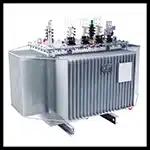
- Replace two aging units with SCB-series cast-resin dry-type transformers.
- Rebalance feeders to reduce overloading on one workshop branch.
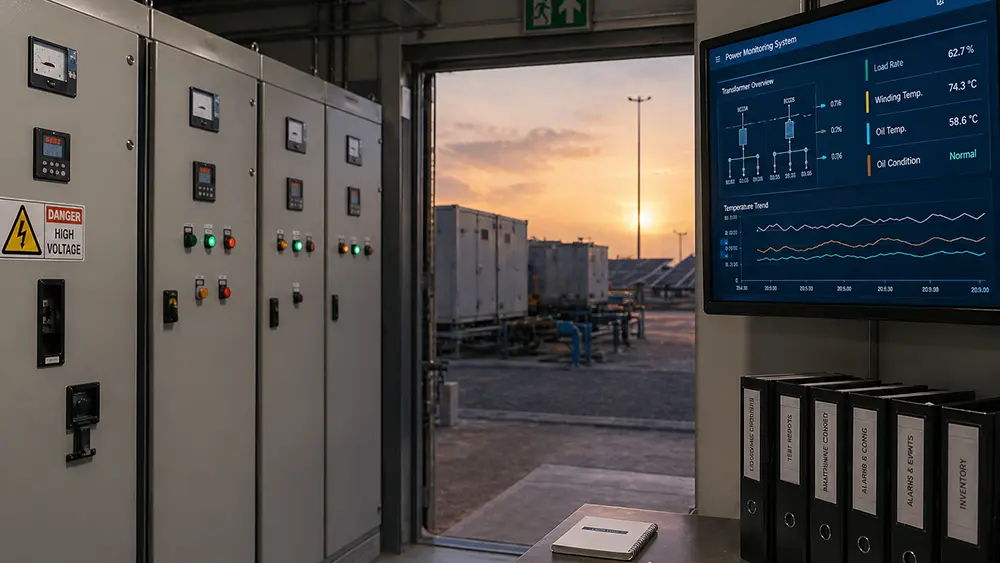
- Add online winding temperature monitoring and alarm points to BMS.
- Reserve cable and panel interface allowances for one future production block.
Why Dry-Type in This Case
For this plant, dry-type offered practical advantages:
- Indoor installation close to load centers, reducing feeder distance.
- Oil-free design that simplified housekeeping and routine safety procedures.
- Better alignment with the client’s maintenance team skills and spare strategy.
We also discussed an oil-immersed transformer option during early comparison. It remained technically viable for outdoor layouts, but for this project’s indoor constraints and shutdown schedule, upgraded dry-type units were a better fit.
Customization Details
To better match site realities, the solution included:
- Tap arrangement aligned with local utility voltage variation patterns.
- Thermal class and cooling path checks based on room ventilation limits.
- Low-noise design target due to proximity to quality-control workstations.
- Terminal and enclosure details adapted to existing cable entry direction, reducing installation uncertainty.
This was still a standardizable industrial product, not a one-off experiment. But those adjustments made commissioning smoother and reduced site modification work.
Coordination During Production and Delivery
One lesson from international industrial project execution is that schedule risk often comes from interfaces, not only from manufacturing.
The client’s shutdown window was fixed around a national holiday period. To support that timeline, coordination included:
- Weekly production progress snapshots for procurement and engineering teams.
- Pre-shipment documentation package for local approval workflows.
- Packing and labeling aligned with staged unloading sequence at site.
- Remote pre-commissioning checklist review before equipment arrival.
Because the plant had limited laydown area, delivery sequence was planned around immediate positioning and installation, rather than long on-site storage. This reduced handling moves and lowered physical damage risk.
Installation and Commissioning Experience
Commissioning was completed jointly by the client’s electrical contractor, plant maintenance engineers, and our technical support team.
The first 48 hours were focused on electrical checks, protection verification, and monitoring point confirmation. After energization, the team monitored thermal behavior and voltage performance across representative load patterns, including startup overlaps that previously caused concern.
No project is friction-free. During commissioning, one instrumentation mapping inconsistency appeared between BMS tags and physical sensor channels. Because both sides had already aligned tag tables before startup, correction was completed quickly without extending the shutdown window.
Early Operating Results
After three months of operation, the plant shared a structured review. Results were operational—not promotional:
- Power-related unplanned stoppages reduced by around 17% compared with the prior comparable period.
- Voltage behavior on sensitive electronics process lines became more stable during load transitions.
- Thermal alarms shifted from frequent “watch” events to mainly normal operating notifications.
- Maintenance teams reported improved accessibility and less intervention complexity for routine checks.
The plant did not describe this as a dramatic transformation. They described it as a more controllable power foundation for ongoing production expansion—which is exactly what a good distribution transformer upgrade should provide.
What This Project Demonstrates
For overseas buyers evaluating a new transformer supplier, this case highlights several practical points:
-
Technical fit starts with load behavior, not only rated capacity.
Mixed industrial loads require realistic margin and network-level thinking. -
A custom transformer solution can be modest but meaningful.
Small interface decisions (terminals, taps, monitoring integration) can reduce major site uncertainty. -
Communication quality directly affects delivery quality.
Cross-functional alignment among sourcing, engineering, and maintenance teams is essential. -
Long-term service begins before commissioning.
Documentation clarity, spare strategy, and maintainability should be planned from day one.
For this electronics facility, the project was successful not because it used advanced language or oversized hardware, but because the final solution was well matched to real operating conditions.
If you are planning a transformer for factory upgrade, especially where downtime windows are tight and power quality matters to process stability, early technical alignment usually saves more time than late-stage troubleshooting.
