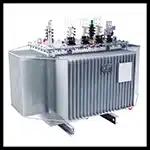
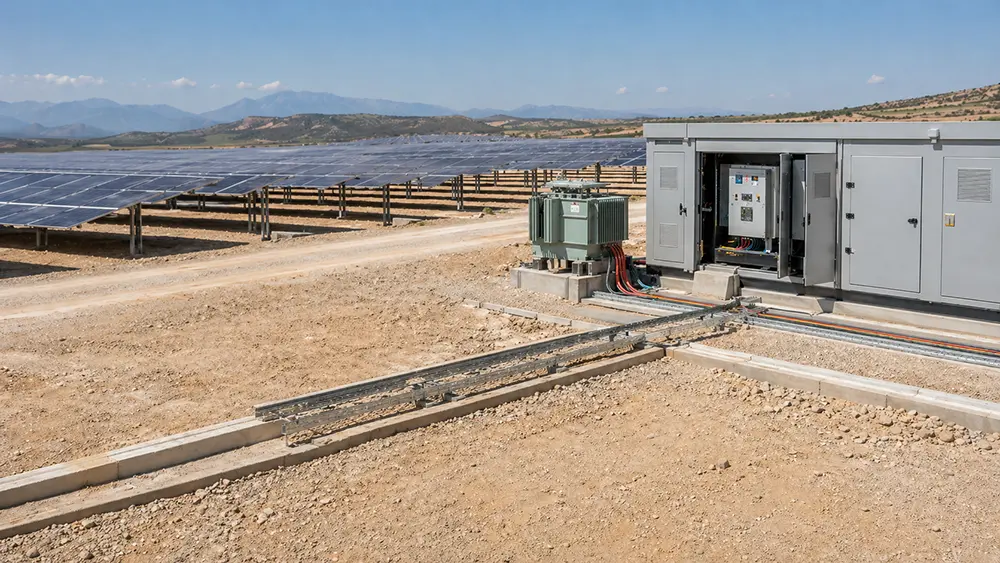
Oil-Immersed Transformer for a Utility-Scale Solar Project
When people talk about utility-scale solar, they often focus on module efficiency, inverter brands, or tracker design. In this project, the decisive work happened one level deeper: at the transformer layer.
This case study covers how a regional renewable energy developer in Southern Europe (we will call them Solterra Grid Partners) selected an oil-immersed transformer package for a 120 MW solar site, and how the project team reduced technical uncertainty from design review to grid energization.
The objective was clear from the beginning: not to chase the lowest initial price, but to secure a custom transformer solution that matched local climate, grid behavior, and long-term maintenance capacity.
Project Context: A Fast-Moving Solar Build with Strict Grid Requirements
The project site was located in a dry inland area with high summer temperatures, dust exposure, and large day-night temperature swings. The owner planned a tight construction schedule because power purchase milestones were linked to tariff windows.
At the electrical design stage, the EPC team identified a common risk in solar projects: components that perform well in catalog conditions but become unstable when combined on real sites with fluctuating generation.
Their core concerns were practical:
- How to maintain stable voltage behavior during sharp irradiance changes.
- How to limit thermal stress during prolonged high-load hours.
- How to simplify field maintenance for a lean local O&M team.
- How to avoid redesign loops close to commissioning.
The owner had previously experienced delays on another project where late transformer documentation updates affected the utility approval timeline. For this new site, they asked for earlier technical alignment and clearer communication from the transformer supplier.
Why the Team Chose an Oil-Immersed Transformer Path
At concept level, the EPC compared both dry-type transformer and oil-immersed options for the medium-voltage collection system. Dry-type equipment was considered for its indoor safety profile, but site conditions and layout favored outdoor deployment with stronger heat dissipation margins.
The selected route was a set of sealed outdoor distribution transformer units in oil-immersed design, coordinated with the inverter block strategy.
The decision was based on engineering fit rather than a single performance claim:
- Better thermal buffering under repetitive daily load peaks.
- Suitable enclosure and anti-corrosion treatment for dust and weather exposure.
- Flexible impedance and tapping configuration for inverter-grid matching.
- Maintenance routines familiar to local service contractors.
For the client, this was less about product category labels and more about lowering lifecycle friction in industrial power distribution.
Early Coordination: Moving from Datasheets to Operating Conditions
Instead of starting with a fixed model number, both teams began with operating data and boundary conditions:
- Inverter output profile by block and expected harmonics envelope.
- Site ambient temperature range and altitude correction factors.
- Utility-side voltage tolerance and reactive power control expectations.
- Civil layout constraints for cable routing and access clearances.
A joint technical checklist was built during online meetings between the owner’s electrical engineer, the EPC design lead, and our application team. This reduced back-and-forth during submittals because each parameter had an owner and a review deadline.
One useful step was agreeing on a “commissioning-first” document package sequence. Instead of waiting for every non-critical drawing to be finalized, the team prioritized utility-facing documents and installation-critical details first. That choice helped the EPC protect the grid-connection schedule while fabrication was still in progress.
The Custom Transformer Solution
The final scope included multiple oil-immersed units tailored for inverter collection blocks, with supporting accessories and documentation adapted to local approval needs.
Key technical adaptations included:
- Impedance coordination tuned to the inverter operating window to reduce nuisance trips during output ramps.
- Thermal design margin reviewed against local summer peaks and enclosure exposure.
- Corrosion protection and sealing selected for long outdoor service in dusty conditions.
- Monitoring points for oil temperature and load trend observation, supporting condition-based maintenance.
- Terminal and layout details aligned with the EPC’s cable pulling and installation sequence.
None of these items are unusual in isolation. The value came from integrating them into one coherent package for a specific site.
This is where a custom transformer solution is usually decided: not in a marketing brochure, but in dozens of small engineering choices that reduce avoidable field decisions.
Manufacturing and Delivery: Managing Interface Risk, Not Just Lead Time
For utility-scale projects, delays rarely come from one dramatic failure. More often, they come from interface mismatches between civil, electrical, logistics, and commissioning teams.
To address this, the project used a milestone-based communication rhythm:
- Pre-production freeze review on key electrical parameters.
- Factory progress checkpoints with photo records for critical stages.
- Document issue tracking for utility and EPC review comments.
- Shipment planning alignment with site installation windows.
During packing and dispatch planning, the client requested clearer labeling logic to match their on-site block numbering system. The update was simple, but it reduced receiving errors and saved installation time.
This kind of coordination is easy to overlook, yet it directly affects how smoothly a transformer for industrial project deployment actually happens.
Site Commissioning Experience
Commissioning took place in phases, block by block, to control risk before full energization. The field team reported that installation access and terminal orientation matched the agreed drawings, which reduced rework.
During the first energization period, engineers tracked:
- Temperature behavior under increasing daily generation.
- Voltage stability during cloud-driven output fluctuations.
- Alarm history and response during initial dispatch cycles.
The early operating data showed stable behavior consistent with design assumptions. More importantly, the O&M team said monitoring points and documentation made troubleshooting workflows clearer than in their previous project.
In complex industrial power distribution environments, this operational clarity is often as important as raw efficiency metrics.
Results After the First Operating Season
After the first high-irradiance season, the owner and EPC summarized outcomes in practical terms:
- More stable power distribution across inverter collection blocks during peak generation hours.
- Reduced installation uncertainty thanks to earlier parameter alignment and document sequencing.
- Improved maintenance accessibility through clearer monitoring and field-oriented configuration.
- Better match to site conditions, especially for thermal performance and outdoor durability.
The project did not claim zero incidents or extraordinary gains. Instead, it achieved what most serious utility owners want: predictable behavior, manageable maintenance, and fewer late-stage surprises.
What This Project Suggests for Future Solar and Industrial Projects
For developers evaluating a transformer supplier, this case reinforces a simple point: transformer performance is shaped as much by coordination quality as by product specification.
Whether the final choice is a distribution transformer, a larger power transformer, or even a dry-type transformer for indoor applications, the selection process should begin with operating reality:
- How the load changes hour by hour.
- What the local grid actually requires.
- What the local team can maintain confidently.
- Which design details remove risk before equipment arrives on site.
In short, the right oil-immersed transformer is not merely a catalog match. It is an engineering fit across design, delivery, commissioning, and long-term service.
That is the standard we aim for in every transformer for factory and utility-scale renewable project we support.
