Urban Distribution Reliability Upgrade with Smart Monitoring
Project Snapshot
Client (anonymous): NorthBridge Industrial Park Operations Office, East Africa
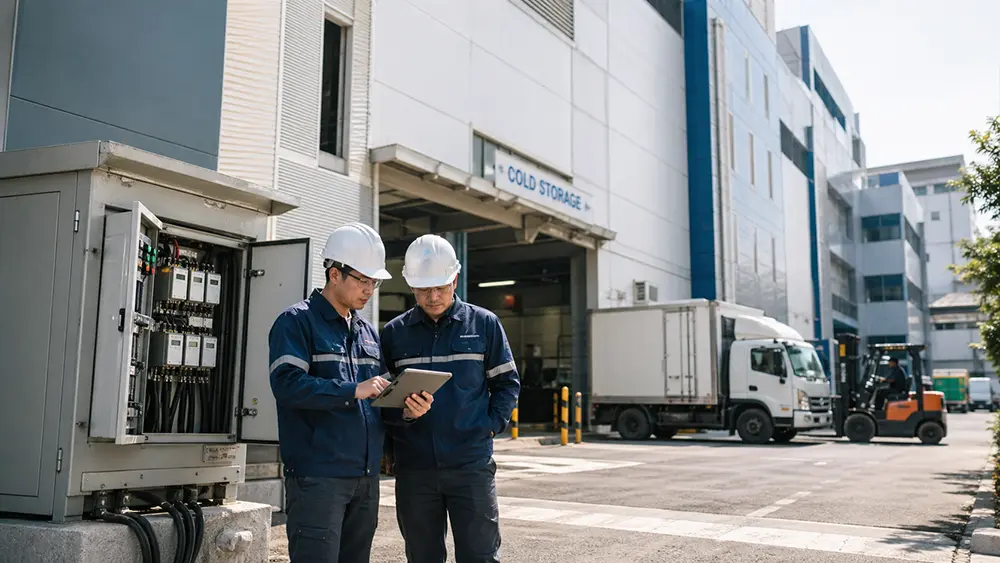
Industry: Mixed-use urban industrial park (food processing, cold storage, light assembly)
Scope: Distribution transformer replacement + smart monitoring deployment
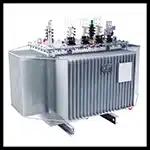
Primary Product: Oil-immersed distribution transformer for industrial power distribution
Why This Project Started
NorthBridge Industrial Park was built in phases over nearly 15 years. Like many urban industrial zones, it grew faster than its original electrical design. New tenants added refrigeration lines, packaging equipment, and small automation cells, while the existing distribution network remained mostly unchanged.
By 2024, the operations team was seeing a familiar pattern:
- Voltage complaints from tenants at shift-change peaks.
- Repeated overheating alarms at two legacy transformer locations.
- Slow fault isolation because field teams had to inspect equipment manually.
None of these issues meant a total system failure, but together they created daily friction. Tenants were losing confidence in power stability, and the park management was spending more time on emergency coordination than planned maintenance.
The team was not looking for a “showcase” project. They wanted a practical upgrade with three clear goals: more stable power distribution, lower installation uncertainty, and better maintenance accessibility after commissioning.
From RFQ to Technical Alignment
The client initially sent a broad RFQ to several transformer supplier candidates. Their first request looked simple on paper: replace older units and add monitoring.
During early discussions, it became clear that the site constraints mattered as much as transformer ratings:
- Two transformer rooms had limited ventilation and uneven cable trench routing.
- One installation point was close to a truck circulation lane, requiring a compact footprint and safer access control.
- The operations team had a small maintenance crew and needed alarm logic they could actually use, not a complicated dashboard that would be ignored.
Instead of quoting only by nameplate data, our engineering team proposed a short remote workshop with the client’s electrical supervisor and maintenance lead. We reviewed single-line diagrams, peak load profiles by tenant type, and historical incident logs.
That meeting changed the project direction in a useful way. Rather than replacing all old units at once, the client chose a staged plan focused first on the two most unstable nodes. This reduced operational risk and allowed the maintenance team to validate performance before phase two.
The Selected Custom Transformer Solution
For phase one, the final configuration centered on oil-immersed distribution transformers with efficiency and thermal margin matched to the park’s real operating behavior.
Why oil-immersed transformer in this case?
A dry-type transformer was discussed, especially for indoor safety concerns. However, after comparing room conditions, overload patterns, and lifecycle service capability, the client selected oil-immersed units for three reasons:
- Better thermal behavior under recurring peak loads.
- More stable long-duration operation in the local ambient environment.
- Familiar maintenance practices for the existing service team.
What was customized
This was not a “special model” project, but it was a true custom transformer solution in engineering details:
- Tap range and impedance were adjusted to match feeder voltage behavior.
- Terminal and cable entry orientation were adapted to existing trench constraints.
- Protection and alarm points were coordinated with the client’s SCADA conventions.
- Monitoring focused on actionable signals: winding temperature trend, load rate, oil condition indicators, and threshold-based alarm outputs.
The objective was straightforward: deliver a distribution transformer for industrial project conditions, not just a catalog unit.
Production, FAT, and Delivery Coordination
Because the park could not stop operations for a long shutdown window, the delivery schedule had to align with tenant production calendars.
The client and our team agreed on milestone-based communication:
- Design freeze confirmation with signed drawing set.
- Factory progress updates tied to key manufacturing stages.
- FAT witness plan with a concise checklist focused on critical acceptance items.
The client’s representative joined FAT remotely for part of the test sequence and received documented records for electrical routine tests and monitoring signal verification.
Logistics was also planned early. Access roads around the park are busy during daytime, so unloading was arranged for an off-peak evening slot. The installation contractor, client maintenance team, and our commissioning support engineer worked from a shared method statement to reduce handover gaps.
Commissioning and Early Operation Experience
Commissioning was completed in two steps to keep tenant impact low:
- Transformer energization and baseline measurement.
- Monitoring activation and alarm threshold tuning after one week of real load data.
This sequencing mattered. If alarm thresholds are copied directly from generic templates, teams often receive too many non-critical alerts. Instead, thresholds were tuned to local operating patterns, making the warning system more credible for day-to-day use.
During the first three months, the client reported fewer voltage-related complaints in the upgraded sections and faster decision-making during abnormal events. The biggest operational change was not a dramatic technology leap, but improved visibility:
- Maintenance staff could identify load stress trends before dispatching field crews.
- Incident response started with data context, not guesswork.
- Planned interventions replaced some reactive nighttime troubleshooting.
Results After the First Maintenance Cycle
After one full maintenance cycle, the operations office summarized the outcome as “more manageable reliability.” Their wording is worth noting: they did not claim zero incidents, but they saw clear improvement in control and predictability.
Observed results included:
- More stable industrial power distribution in the upgraded feeders during peak periods.
- Reduced outage handling time at targeted nodes because pre-fault indicators were visible.
- Improved maintenance accessibility, including clearer alarm prioritization for small teams.
- Higher confidence from tenants due to more transparent communication on power events.
For a mixed-use urban park, these outcomes were commercially meaningful. Better electrical stability helped tenants protect production schedules, while the park operator reduced the operational noise that comes from repeated emergency responses.
Lessons for Similar Urban-Industrial Sites
This project reinforced several practical lessons for buyers sourcing a transformer for factory and industrial project use:
1) Start with operating behavior, not only rated capacity
Nameplate alignment is necessary, but load shape, ambient conditions, and maintenance capability often determine long-term performance.
2) Keep monitoring focused and actionable
Smart monitoring creates value when alarms are tied to decision workflows. More data is not always better.
3) Treat supplier communication as part of technical risk control
A capable transformer supplier should help clarify assumptions early—especially around installation constraints, test acceptance, and commissioning logic.
4) Staged upgrades can reduce risk
For live urban sites, phased deployment often balances reliability gains with practical shutdown limits.
Closing Note
NorthBridge Industrial Park did not need an oversized redesign. It needed a well-matched combination of hardware upgrade and operational visibility.
By aligning transformer engineering details with site reality, the project achieved a quieter but important outcome: fewer surprises in daily power operations, and a maintenance team better equipped to act before minor issues become major interruptions.
For many urban industrial facilities, that is what a successful transformer project looks like—credible planning, steady execution, and measurable improvement over time.
