Transformer Receiving Inspection and Temporary Storage Checklist Before Installation
A transformer order is not finished when the unit leaves the factory. For many overseas projects, the most vulnerable period begins after shipment: unloading, receiving inspection, warehouse storage, and waiting for civil works or switchgear installation to catch up.
This stage is easy to underestimate because the transformer may already have passed routine tests and export packing checks. Yet transport vibration, rough unloading, moisture exposure, missing accessories, or poor temporary storage can turn a technically correct transformer into a delayed commissioning problem.
For procurement teams, warehouse managers, logistics partners, and factory project owners, the goal is not to perform a full electrical diagnosis at the gate. The goal is to create a disciplined handover process that protects warranty evidence, identifies visible risk early, and keeps the transformer in suitable condition until installation.
Start inspection before the transformer is moved
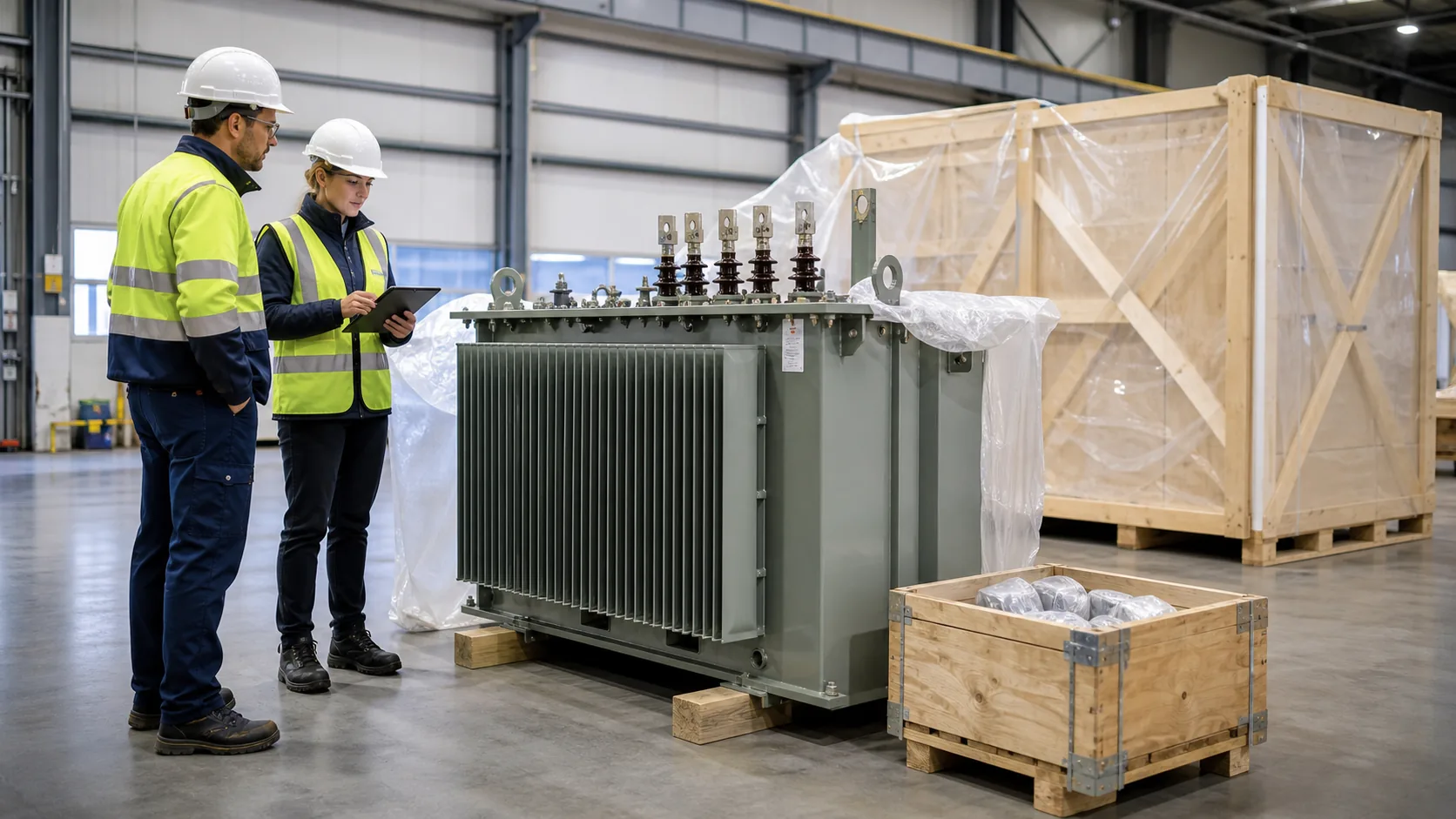
Receiving inspection should begin before unloading, especially for heavy oil-immersed transformers, compact substations, or dry-type units in protective enclosures. Once the transformer is lifted, repositioned, or unpacked, it becomes harder to prove whether damage happened during transport, unloading, or site handling.
Before moving the cargo, the receiving team should record:
- container or truck condition;
- crate condition on all visible sides;
- moisture stains, torn wrapping, broken boards, or impact marks;
- shock recorder or tilt indicator status, if supplied;
- nameplate visibility and serial number;
- packing list, delivery note, and accessory box count;
- photos and video from multiple angles.
If there is obvious crate damage, the team should not treat it as a simple cosmetic issue. The crate may have absorbed an impact that also affected bushings, radiators, gauges, terminals, or internal supports. Take photos before unloading, notify the supplier and forwarder, and follow the insurance or claim procedure required by the contract.
Check the nameplate and documents first
The first technical check is identity. It sounds basic, but it prevents expensive confusion on multi-transformer projects where several units or accessory packages arrive together.
Match the delivered transformer against the purchase order and approved drawings:
- rated capacity;
- primary and secondary voltage;
- frequency and phase;
- vector group;
- impedance, if shown on the nameplate or test report;
- cooling method;
- tap range and tap position;
- serial number;
- accessory list;
- test report and certificate package.
If the project includes future parallel operation or an upgrade of existing equipment, this document check is more than administrative. Voltage ratio, vector group, impedance, and tap data affect whether units can operate as planned. The same project may also require a downstream fault-level review; our article on transformer short-circuit current and switchgear rating explains why transformer data should be checked before energization.
Inspect external parts without rushing unpacking
Unpacking should be controlled. Removing all protection at once may expose the transformer to rain, dust, or accidental contact before the installation area is ready. A better approach is to open enough packaging to inspect critical parts, then preserve suitable covering until installation.
For an oil-immersed transformer, pay close attention to:
- oil leakage around welds, valves, radiators, bushings, conservator connections, and drain points;
- cracked, chipped, or loose porcelain and epoxy bushings;
- bent radiator fins, damaged cooling tubes, or displaced fan assemblies;
- oil level indicator condition;
- pressure relief device condition;
- thermometer pocket, gauges, valves, wheels, rollers, and lifting lugs;
- missing bolts, loose covers, or damaged paint exposing bare metal.
For a dry-type transformer, the inspection focus is different:
- broken enclosure panels or blocked ventilation openings;
- cracks, impact marks, or contamination on cast-resin coils;
- displaced insulation barriers;
- loose terminal hardware;
- moisture, dust, or packaging debris inside the enclosure;
- damaged temperature-control devices, fans, sensors, or terminal boxes.
The product family changes the inspection priorities. An oil-immersed transformer is usually more sensitive to oil leakage, sealing, pressure condition, and radiator damage. A dry-type transformer needs closer attention to ventilation, coil cleanliness, enclosure protection, and indoor moisture control.
Separate visible damage from commissioning tests
Receiving inspection is not a substitute for pre-energization testing by qualified electrical personnel. Warehouse staff can identify visible risks, count accessories, and preserve evidence, but insulation resistance, winding resistance, ratio verification, oil testing, relay checks, protection coordination, and final energization procedures should follow the project specification and local requirements.
The receiving report should clearly separate three categories:
- Accepted for storage: no visible damage, documents match, accessories counted.
- Accepted with observation: minor paint scratch, crate damage without visible equipment damage, missing non-critical document, or accessory count pending confirmation.
- Hold for supplier review: oil leakage, damaged bushing, severe impact mark, wet packaging, missing critical accessory, mismatched nameplate, or abnormal shock/tilt record.
This classification helps the project team avoid two common mistakes: ignoring real damage because the installation date is urgent, or delaying the whole project over a minor issue that can be documented and corrected.
Store the transformer as an electrical asset, not ordinary cargo
Temporary storage is often where good equipment is slowly damaged. A transformer waiting two weeks for installation may be fine. A transformer waiting three months in a humid yard, under torn plastic, on uneven ground, or beside corrosive chemicals is a different risk.
A practical storage plan should cover:
- stable, level ground with enough bearing capacity;
- protection from rain, flooding, standing water, and roof leakage;
- ventilation to prevent condensation under covers;
- separation from chemicals, salt spray, cement dust, welding work, and abrasive dust;
- security against unauthorized opening or part removal;
- clear access for inspection and later lifting;
- no stacking or placing heavy items on transformer packaging;
- preservation of lifting points, rollers, valves, gauges, and terminal covers.
For outdoor storage, do not assume that wrapping the transformer tightly in plastic is always safer. A sealed cover can trap moisture and create condensation. Weather protection should keep rain out while allowing reasonable air movement, unless the supplier gives a different preservation instruction.
For indoor storage, keep the area dry, clean, and away from process dust. If the unit includes space heaters, control cabinets, or moisture-sensitive accessories, confirm whether they need to be energized or preserved according to the supplier’s instructions.
Keep accessory boxes under control
Many installation delays come from small missing items rather than the transformer body itself. Temperature controllers, fans, rollers, gaskets, terminal connectors, monitoring devices, silica gel breathers, valves, cable glands, drawings, and commissioning documents may be packed separately.
Accessory boxes should be:
- counted against the packing list at arrival;
- photographed before opening;
- labeled by project, transformer serial number, and installation location;
- stored in a dry and secure place;
- opened only by authorized personnel;
- checked before the installation team arrives on site.
For projects with multiple transformers, do not mix accessory boxes unless the supplier confirms interchangeability. Small differences in voltage class, enclosure design, tap-changer configuration, or monitoring package can create confusion during installation.
Record storage condition during long waiting periods
If installation is delayed, the receiving report should not be the last record before commissioning. A simple storage log can prevent disputes and catch preventable issues.
For long storage periods, record:
- inspection date and person responsible;
- visible condition of covers and packaging;
- signs of moisture, leakage, rust, insects, or dust accumulation;
- oil level or pressure indication, where applicable;
- condition of accessory boxes;
- site events such as heavy rain, flooding, relocation, or nearby construction work.
The log does not need to be complicated. It needs to be consistent enough to show that the transformer was preserved with care after delivery.
Prepare a clean handover to the installation team
Before installation begins, the warehouse or project owner should hand over more than the transformer itself. The installation team needs the evidence and documents collected since arrival.
A useful handover package includes:
- receiving inspection report;
- photos from arrival and storage;
- packing list and accessory confirmation;
- nameplate photo;
- factory test report;
- approved drawings;
- record of any damage notice or supplier response;
- storage inspection log;
- lifting and handling instructions;
- installation manual or supplier guidance.
This package reduces guesswork during site work. It also helps the electrical contractor decide which pre-installation checks need extra attention.
A better receiving process protects the whole project
Transformer receiving inspection is not paperwork for its own sake. It protects schedule, warranty position, site safety, and commissioning confidence. The earlier a problem is found, the easier it is to assign responsibility, arrange replacement parts, repair paint damage, dry or clean affected areas, or adjust the installation plan.
For B2B buyers and factory project teams, the practical rule is simple: treat the transformer as engineered equipment from the moment it arrives. Inspect it before moving, verify identity before storage, protect it from moisture and mechanical damage, control accessories carefully, and keep records until energization is complete.
A transformer that is selected correctly, delivered carefully, stored properly, and installed with the right checks gives the project a much better chance of starting up without avoidable delays.
