Site Conditions for Transformer RFQs: What Buyers Should Specify
A transformer quotation is only as accurate as the site description behind it. Capacity, voltage ratio, impedance, and losses matter, but a technically correct transformer can still become the wrong purchase if the RFQ says nothing about ambient temperature, altitude, dust, moisture, corrosive air, ventilation, cable entry, maintenance access, or local enclosure requirements.
For overseas factories, EPC teams, commercial buildings, mines, industrial parks, and renewable-energy sites, site conditions should be treated as engineering input, not background information. The final design still depends on project drawings, applicable standards, utility requirements, fire rules, AHJ review, and the supplier’s approved datasheet. A clear RFQ simply makes early quotations more comparable and reduces avoidable technical gaps.
Why site conditions belong in the RFQ
Many RFQs begin with a short line: “We need a 1000 kVA transformer, 11 kV to 0.4 kV, 50 Hz.” That may be enough for a budget discussion, but it is not enough for a purchase decision. The same rating can be used in a clean indoor electrical room, a dusty cement plant, a humid coastal park, a high-altitude mine site, an outdoor compact substation, or a commercial building basement with strict fire and access limits.
Each case may affect cooling, enclosure selection, corrosion protection, cable arrangement, monitoring, maintenance clearance, packaging, and commissioning checks. A buyer comparing only kVA and price may receive quotations that are not technically equivalent.
A site-condition schedule buyers can send with the RFQ
The following schedule is not a replacement for an electrical design package. It is a practical way to state known conditions, identify assumptions, and show suppliers where engineering confirmation is still needed.
| RFQ item | Why it matters | What to provide |
|---|---|---|
| Installation location | Indoor, outdoor, rooftop, basement, mining, coastal, or public-access sites create different enclosure and access questions. | Site type, room or yard layout, public access risk, door sizes, floor loading, and handling route. |
| Ambient and altitude | Cooling, loading assumptions, insulation coordination, and derating review depend on real conditions. | Maximum and minimum temperature, seasonal extremes, site elevation, and any local correction rules. |
| Humidity and condensation | Moisture can affect dry-type coils, terminals, control cabinets, heaters, breathers, and storage condition. | Humidity range, condensation risk, dehumidification plan, and whether space heaters are required. |
| Dust and contamination | Dust can block ventilation, reduce insulation margin, and increase maintenance demand. | Dust source, cleaning method, filtration plan, and whether conductive or abrasive dust is present. |
| Corrosive atmosphere | Salt spray, chemicals, fertilizer, wastewater, and process fumes may affect metal parts and coatings. | Coastal distance, chemical exposure, corrosion category if specified, and coating or material notes. |
| Water exposure | Rain, washdown, sprinkler areas, or flooding require more detail than “waterproof.” | Indoor dry, outdoor rain, splash, washdown, flood level, drainage, and cable-entry exposure. |
| Enclosure rating | IP, NEMA, or local enclosure language must match the market and installation condition. | Required IP rating, NEMA type, or local equivalent, subject to final datasheet and evidence. |
| Ventilation | Poor room ventilation can make a properly rated transformer run hotter than expected. | Room volume, inlet and outlet openings, fan strategy, neighboring heat sources, and required clearances. |
| Cable and grounding interfaces | Bottom, top, side, or busduct entry affects enclosure design and site work. | Cable direction, trench drawings, busduct interface, gland plate needs, and earthing arrangement for engineering review. |
| Local rules | Standards are market-specific and may affect enclosure, fire, seismic, testing, and documents. | Applicable IEC, IEEE, ANSI, GB/GB/T, utility, project, or AHJ requirements. |
IP ratings help, but they are not the whole environment
Ingress protection codes are useful because they replace vague wording with a recognized classification. IEC 60529 covers degrees of protection provided by electrical equipment enclosures, including protection against access to hazardous parts and ingress of solid objects and water. That makes it a helpful reference when a project asks for an IP code.
However, an IP number alone does not describe corrosion, solar heating, condensation, chemical exposure, mechanical impact, seismic requirements, cable gland quality, ventilation loss, or maintenance practice. It also should not be casually converted to a NEMA enclosure type without checking the market requirement and standard basis.
For transformers and switchgear, higher enclosure protection can create a trade-off. A tighter enclosure may reduce dust or water ingress, but it can also restrict airflow if the thermal design is not coordinated. Buyers should avoid writing “highest IP rating available” as a shortcut. A better RFQ states the actual exposure and asks the supplier to propose an enclosure and cooling arrangement subject to the final project specification.
Match equipment type to the actual environment
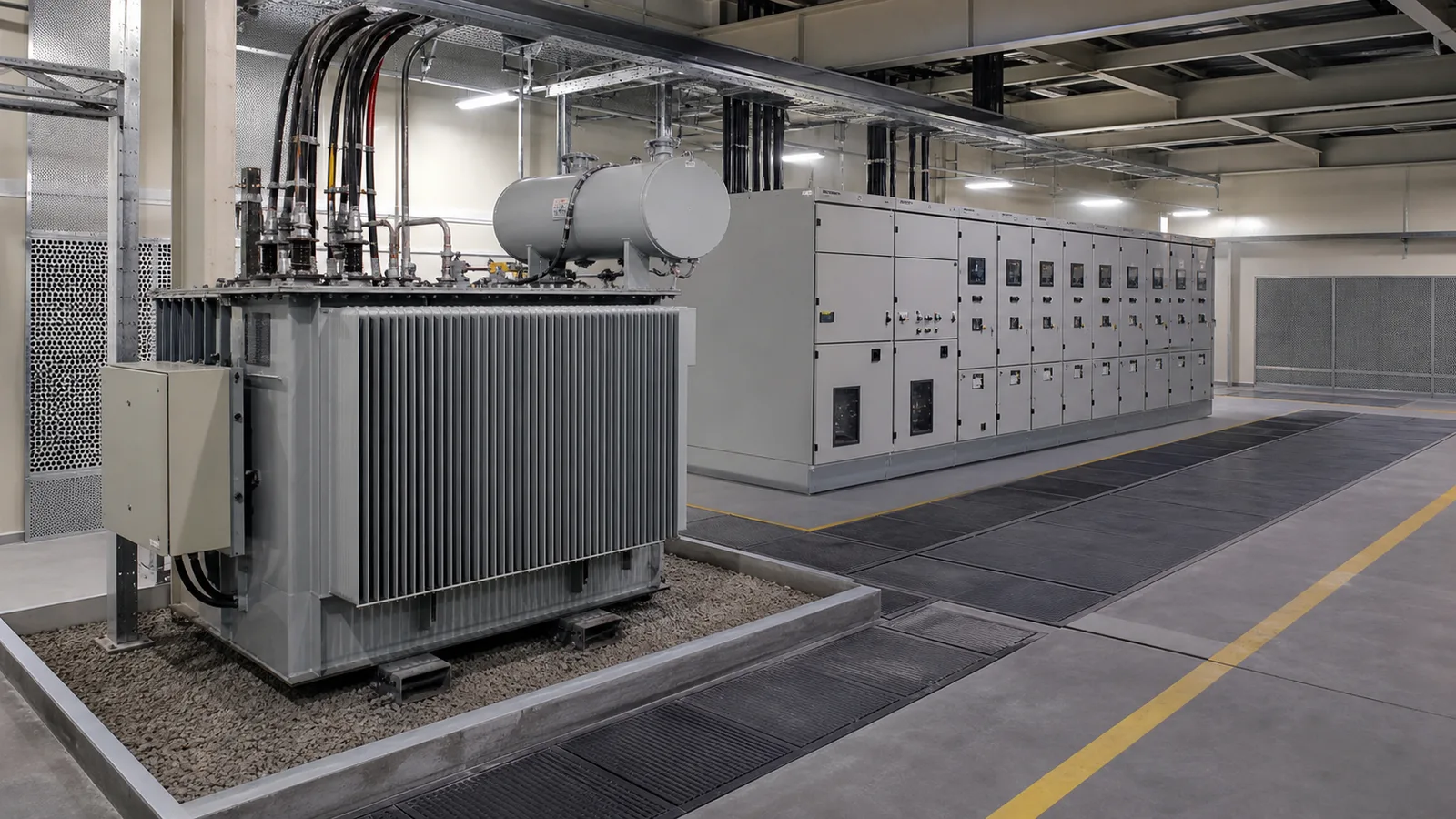
An oil-immersed transformer may suit outdoor utility yards or industrial plants with suitable civil works, but the RFQ should still state ambient range, oil containment expectations, fire separation, radiator clearance, drainage, and access for inspection or oil sampling.
A dry-type transformer may be considered for indoor production buildings, commercial facilities, data centers, hospitals, or basements where the project prefers non-liquid insulation inside the building. The RFQ should describe room ventilation, dust level, humidity, condensation risk, access clearance, noise sensitivity, fire rules, and enclosure protection.
A compact substation is not just a transformer in a box. Outdoor enclosure exposure, cable trench route, ground level, flood risk, vandalism risk, ventilation path, solar exposure, anti-condensation measures, and utility metering arrangement may all affect the final layout.
Switchgear installed near the transformer should be reviewed against the same room conditions. Condensation, dust, corrosion, cable bending space, panel access, arc-risk procedures, fault level, protection coordination, and local code requirements should be checked by the project engineer and panel supplier.
RFQ wording buyers can adapt
A useful RFQ does not need to be long. It needs to separate confirmed data from assumptions and open items.
| RFQ clause | Example wording to adapt |
|---|---|
| Site summary | “Equipment will be installed in an indoor electrical room / outdoor yard / compact substation area at [site type]. Final requirements are subject to approved drawings, local code, utility requirements, and AHJ review.” |
| Climate | “Please quote based on ambient temperature range of [min] to [max], altitude [m], humidity [range if known], and [dust / coastal / chemical / clean indoor] environment. Values to be confirmed by project documents.” |
| Enclosure | “Propose suitable enclosure protection for the stated environment. Required IP rating / NEMA type / local enclosure class is [requirement if specified]. Submit final datasheet and relevant test or compliance documents for review.” |
| Interfaces | “Cable entry is [bottom/top/side/busduct], grounding arrangement is subject to project design, and lifting route / floor loading / installation clearance must be confirmed before manufacturing.” |
| Boundaries | “Quotation does not replace the final design review. Protection, earthing, fire, seismic, civil works, and commissioning requirements must follow project specifications and applicable local standards.” |
This wording helps the supplier price the right configuration while protecting the buyer from assuming that a generic catalog model already covers the site.
Warning signs before the order is frozen
Pause for technical clarification if any of these points are unknown:
- the transformer is going outdoors but no enclosure or weather exposure is defined;
- the site is coastal, chemical, dusty, or humid but the RFQ only says “standard”;
- the unit is dry-type but no ventilation or room temperature data is available;
- the compact substation location is not checked for flood level, public access, or cable route;
- the building has fire, seismic, acoustic, or AHJ requirements not shared with the supplier;
- switchgear and transformer are purchased separately without a common site-condition schedule.
The site-condition schedule should also follow the project after purchase. It belongs in drawing approval, factory acceptance review, shipping, receiving inspection, storage, installation, and commissioning. If equipment waits on site before installation, environmental assumptions become preservation requirements; our receiving inspection and temporary storage checklist covers that handover stage.
The practical rule is simple: describe the environment before asking the transformer to live in it. A clear RFQ gives suppliers the data they need, gives engineers a better basis for review, and gives buyers a more honest price comparison. Final suitability still has to be confirmed through project drawings, supplier documents, applicable test evidence, local code, utility requirements, and qualified engineering review.
