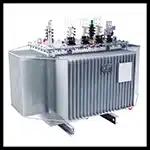

Compare Transformer Quotations: A Buyer’s Bid Tabulation
The lowest transformer quotation is only the lowest number on the day it is opened. It is not necessarily the lowest installed cost, the same equipment scope, or an acceptable technical offer. The practical answer is to build one bid tabulation from the project data sheet, then mark every missing assumption, exception and value that cannot yet be compared.
This is especially important when a buyer receives several offers that all say, for example, “2,000 kVA, 11/0.4 kV transformer.” That short description leaves open the connection arrangement, tapping, losses, cooling scope, terminal interface, drawings, tests, documents and site assumptions. The project specification—not a catalogue or a previous order—must decide what is required. Final selection should be confirmed against the approved single-line diagram, applicable market standard, utility requirements, local code, supplier data sheet and qualified engineering review.
This guide helps procurement, EPC and industrial project teams compare offers for oil-immersed transformers, dry-type transformers and related packages. It is a purchasing-control tool, not an electrical design, protection study, short-circuit calculation or acceptance decision.
Make one “basis of comparison” before opening prices
Start with a master sheet owned by the project team. Copy each supplier’s stated value into the same row; do not convert unclear descriptions into assumed equivalents. A blank cell, “standard,” “as per manufacturer” or “included” should remain a clarification item until the supporting data sheet or drawing explains it.
Lock the project basis at the top of the sheet: equipment type, rating basis, voltage ratio, frequency, installation location, applicable standard basis, single-line revision, commercial currency and delivery term. Then give each line one of four statuses:
- Matched: stated and demonstrably aligned with the project requirement.
- Different: stated, but not the same requirement or condition.
- Excluded: explicitly not supplied or by others.
- Open: absent, ambiguous, conditional or awaiting engineering confirmation.
This simple discipline stops a quote with fewer accessories or a different terminal arrangement from appearing cheaper only because scope has moved elsewhere.
The bid tabulation buyers should actually use
| Comparison area | Put this in the project column | Record from each quotation | Escalate when |
|---|---|---|---|
| Equipment identity | Transformer type, service duty, indoor/outdoor location, quantity and tag number. | Exact offered type, rating and stated service. | A supplier uses a generic model name or omits the installation basis. |
| Electrical basis | Rated power, voltage ratio, frequency, vector group, tapping requirement, impedance requirement if specified, and neutral arrangement. | Nameplate values, tolerances, tap range and connection statement. | Values are missing, based on a different standard, or conflict with the vector-group interface or project single-line diagram. |
| Loss and efficiency evidence | Applicable rule or owner limit, reference temperature/load condition and requested evidence. | Guaranteed no-load and load losses where required, test basis, exclusions and any quoted evaluation method. | A loss number has no stated condition or offers use different regulatory/project bases; see the loss comparison checklist. |
| Thermal and cooling scope | Cooling class, duty profile, ambient/site data, fan supply and controls if required. | Offered cooling arrangement, auxiliary supply needs, accessories and stated assumptions. | “Standard cooling” replaces the site conditions or accessories are not itemized. |
| Terminals and physical interface | Cable or busduct connection, entry side, bushing/terminal details, clearances, dimensions, mass, centre of gravity and finish. | Terminal drawings, outline drawing revision, included boxes, interface exclusions and shipping configuration. | The offer cannot be checked against the cable route or cable-box requirements. |
| Controls and accessories | Required alarm/trip points, control voltage, marshalling terminals, spare contacts, local indication and interface owner. | Point list, contact form, terminal numbering, supplied devices and who integrates them. | The offer says “standard accessories” instead of attaching a point list. |
| Tests, records and release | Required routine/special/type-test evidence where applicable, witness rules, reports, drawings, manuals, packing list and approval gates. | Test list, document register, report language, proposed witnessing and deviations. | A “pass” statement replaces the agreed evidence or document scope. |
| Logistics and commercial boundary | Delivery term, packing, transport configuration, unloading boundary, spares, warranty terms and exclusions. | Incoterm or local equivalent, package list, delivery condition, commercial assumptions and exceptions. | Installation, oil handling, site testing, commissioning or civil work is silently assumed to be by others. |
The table is intentionally not a list of numerical design values. Capacity, impedance, insulation, sound, temperature, short-circuit withstand, protection and fire measures all need project-specific confirmation; similar ratings do not make offers technically interchangeable.
Compare evidence, not adjectives
Words such as “premium,” “low loss,” “export standard” and “complete package” do not establish equivalence. Ask each bidder to cite a data-sheet line, drawing, test record or deviation statement beside the claim. That turns the bid meeting from an argument about marketing language into a review of traceable evidence.
For IEC-based projects, IEC 60076-1 describes the general scope for power transformers and includes topics such as functional specification, transport and facilities for condition monitoring within its stated scope. For many North American liquid-immersed applications, IEEE C57.12.00-2021 sets general electrical and mechanical requirements and is a basis for selection within its scope. Neither reference selects the required option set for every market or project. The purchase document must state the applicable edition, owner specification and acceptance evidence.
Separate a deviation from a clarification
A clarification asks what the supplier means; a deviation admits that the offered basis differs from the requirement. Keep them in separate registers.
Examples of clarifications include an unexplained cooling notation, an accessory named without its contact details, or an outline drawing that lacks a revision. Examples of deviations include a different vector group, terminal location, tap range, loss basis, test scope, delivery boundary or document language. Ask for the commercial and schedule effect of every accepted deviation before award.
Do not close an issue merely because the project team can probably accommodate it. If accommodation affects cable length, protection settings, civil work, maintenance access, utility approval or installation method, route it to the responsible designer or reviewer. The site-condition RFQ guide is a useful cross-check: the environmental and installation assumptions on the quotation should match the approved project inputs.
A clean clarification cycle before award
Send the same numbered clarification list to every bidder, with the relevant drawing or schedule revision attached. Request one reply per line: “complies,” “deviates,” “excluded,” or “not applicable,” followed by the evidence reference. Avoid accepting a revised price without a revised technical schedule; otherwise the commercial record and engineering record can drift apart.
Before releasing a purchase order, freeze these four files together:
- The final bid tabulation with all open items closed or assigned.
- The supplier’s approved data sheet and deviation list.
- The approved outline/interface drawing and document register.
- The purchase order, including the agreed test, packing, delivery and site-scope boundaries.
If a technically important row is still open, treat the offer as not yet comparable rather than forcing a ranking. That pause is usually less disruptive than correcting the scope after manufacturing or delivery.
RFQ wording buyers can adapt
The bidder shall complete the purchaser’s bid-tabulation schedule line by line and identify all departures, exclusions, assumptions and data pending confirmation. “Standard” or “included” is not sufficient where the schedule requests a value, drawing, point list, test record or named document. Any accepted deviation remains subject to the final project drawings, applicable standards, utility requirements, local code and purchaser approval.
Practical decision rule
Award only after the preferred quotation has the same declared technical basis as the project—or its differences are visible, priced, approved and reflected in the final documents. If two bids cannot be tied to the same conditions and evidence, compare their scope first, not their totals.
